Excelente valoración 4,7/5


Beige curtains


Beige curtains: the neutral of neutrals
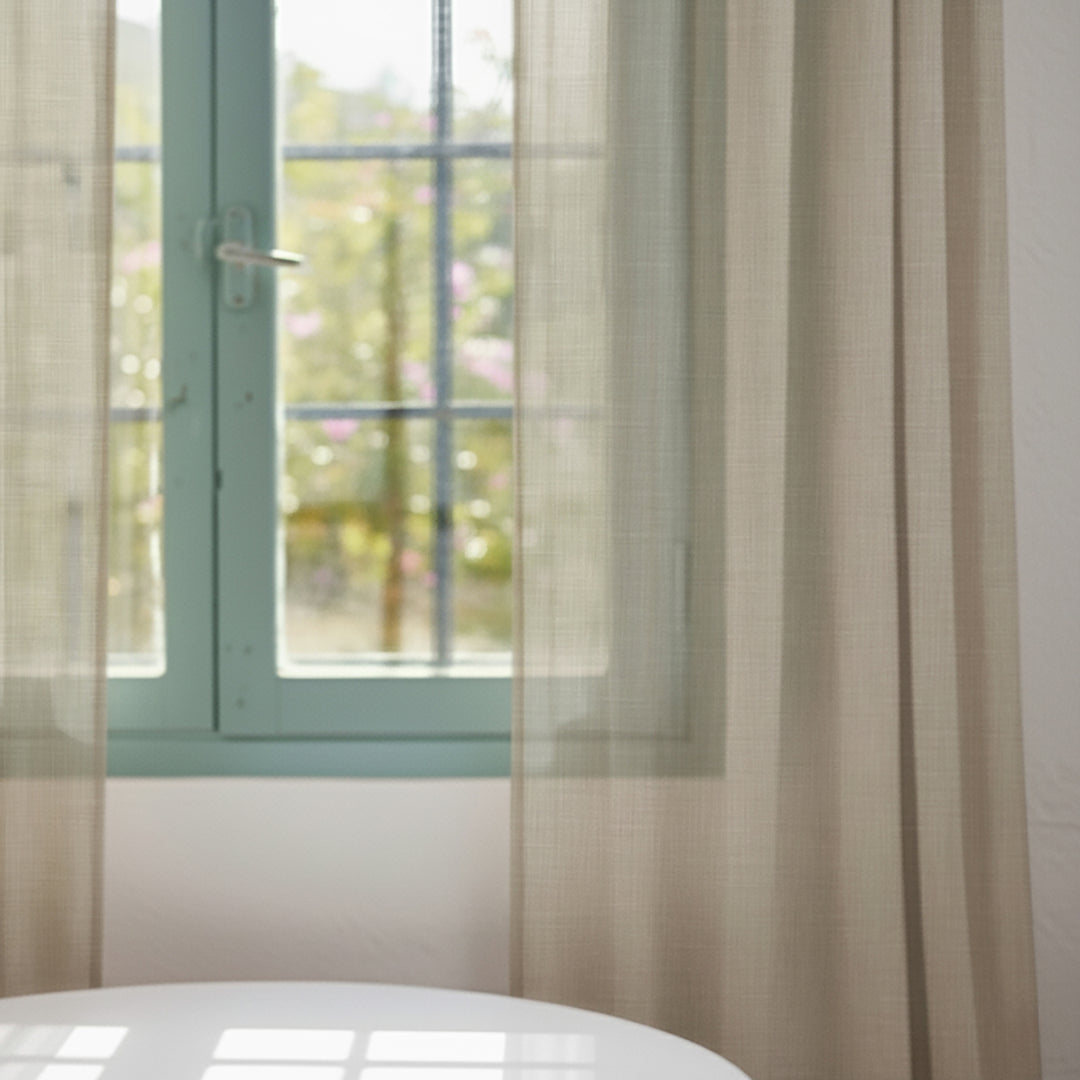
There's a reason beige has been in every well-put-together home for years and isn't going anywhere: it's the colour that gives the most while asking for nothing. It brings warmth to the room, softens the light coming in and gets on with everything you already have. It's not a seasonal colour, it's the backdrop a room is built on.
There are several compositions and several opacities in beige, and each model states its own on its product page. They include the linen ones, a blend of 70% viscose and 30% linen, where beige works especially well: the natural tone of the fabric and the colour go in the same direction, so the texture reads better than in any other colour.
Warmth
What it brings to the room, without changing anything else.
Texture
It reads better in beige. Tone and fabric work as one.
0
Seams. The hem is adjusted with an iron and iron-on tape.
Why beige decorates so well
Beige has a rare quality in decor: it improves what's around it instead of competing with it. That's why it appears in almost every interior that works, and why it stays season after season while other colours come and go.
It adds warmth without adding colour
It's the first thing you notice when you hang it. Light passes through the fabric and reaches the room with a warm tint built in, so the space feels cosier without any new colour appearing. It works especially well in rooms where natural light is scarce or cold, because beige softens it instead of leaving it harsh.
It's wood's best companion
Parquet floors, oak furniture, a walnut table, a pine headboard. Beige belongs to the same family as all of them: it accompanies them, ties them together and makes the whole read as one thing rather than separate pieces. In a home with visible wood, it's the natural choice for the windows.
The neutral that doesn't date
Earthy tones have been on trend for years, and there's a solid reason: they're the colours of natural materials, so they don't depend on each season's fashion. A beige bought today will still work when you change the sofa, the rug or the cushions. It's the colour that will least force you to change anything else.
In the living room, it adds character without noise
In a living room with light walls and neutral furniture, beige at the windows brings warmth to the whole without becoming the star. It covers the largest textile surface in the room, so its presence is felt, but calmly: a touch of colour that doesn't force everything else to agree with it.
| Beige and ecru | White | |
|---|---|---|
| Effect on light | Softens it | Reflects it without tinting |
| Feel | Warmth, cosiness | Space, brightness |
| Where it shines | Scarce or cold light | Small rooms |
| With wood | Ties it together | Contrasts |
| Goes with | Wood, earthy tones | Anything |
Both are good choices. White brightens and adds space, beige adds warmth: it's about how you want the room to feel.
Beige, ecru, sand: how they differ
They're three names used almost as synonyms, but at a window they don't give the same result. The difference is how far they move from white, and in which direction.
Ecru
The brightest of the three. It's the natural tone of unbleached fabric, with a barely-there ivory undertone: it keeps the brightness of white and adds a touch of warmth. It's the choice if you want light and a warm neutral at the same time.
Beige
True beige, with a barely-there golden undertone. It's the tone that best balances warmth and neutrality, the most versatile with wood and the one most people picture when they think of a beige curtain.
Sand
The most saturated, with real colour presence. It stops being a pure neutral and starts setting the tone of the room. It's a good choice if the living room is understated and you want the window to add something, not just go along.
Beige sheer curtains and heavier curtains
As with any colour, opacity decides what product you have in your hands, and in beige the change is striking because the tone behaves differently depending on thickness.
Translucent beige softens the light
This is where the colour does its best work: light passes through and reaches the room with the warm tint already built in. It filters the midday sun and gives privacy by day. See sheer curtains.
Heavier beige brings colour to the wall
A denser beige doesn't tint the light, because it barely lets it through: instead, it brings its own colour to the window wall. It hangs straight, holds its pleats and works as a surface of colour rather than a filter.
How to choose your shade of beige
Every home's light is different, and a neutral works with it. If your room gets little direct light, a beige or sand will give it the warmth the light doesn't. If you get sun for much of the day, ecru is enough and keeps the room bright.
And if in doubt, look at the wood and fabrics already in the room: the beige that works best is the one that goes in the same direction as them. It's the most reliable way to get it right, and more useful than comparing on a screen.
Frequently asked questions about beige curtains
Beige or white?
Both are good choices and do different things. White reflects light and leaves it as it is, so it brightens and adds space, and works very well in small rooms. Beige adds warmth and softens the light as it passes, so it feels cosier, and it's the natural choice if there's wood in the room or if you want a backdrop that doesn't date.
What's the difference between beige, ecru and sand?
How far they move from white. Ecru is the natural tone of unbleached fabric and, against the light, looks almost white, but with an ivory undertone. Beige is a step warmer and the most versatile of the three. Sand is the most saturated and brings its own colour to the room.
How do I choose my shade of beige?
Let the light in your room and what you already have guide you. If it gets little direct light, a beige or sand will bring the warmth the light doesn't. If you get sun for much of the day, ecru is enough and keeps the room bright. And if in doubt, choose the one that goes in the same direction as the wood and fabrics in the room.
Does it go well with wood?
It's its best combination. Beige belongs to the same family as wood: it accompanies it, ties it together and makes the whole read as one thing rather than separate pieces. In a room with parquet or oak or walnut furniture, it's the natural choice for the windows.
Is beige still on trend?
Earthy tones have been in every interior that works for years, and the reason is solid: they're the colours of natural materials, so they don't depend on each season's fashion. A beige bought today will still work when you change the sofa, the rug or the cushions.
What fabric are they made of?
There are several compositions in beige, and each model states its own on its product page, along with its opacity level and washing instructions. They include the linen ones, in a blend of 70% viscose and 30% linen, where beige works especially well: the natural tone of the linen and the colour go in the same direction, so the texture reads better.
Can I adjust the length without sewing?
Yes. Each curtain comes with iron-on hemming tape: fold the hem wherever you want, place the tape inside the fold and iron it. It stays in place after washing and the seam doesn't show on the outside. It can't be lengthened, so measure first.
Are they made in Spain?
Yes. They're designed in our studio in Cocentaina (Alicante) and made in workshops in Spain.
Design notes
From our creative studio in Cocentaina, Alicante
Finding the beigeGetting a good beige right takes more work than getting a colour right. A colour is chosen; a neutral is searched for. It has to bring warmth without turning yellow, and sit in the narrow space between ecru and sand.
The team always works on it with the window behind and on the real fabric, not on screen: how the tone opens up when light passes through, what depth appears in the folds where the fabric bends and whether it's still that beige next to wood. A well-chosen neutral goes unnoticed, and that's the hard part.

Aitana · Happyfriday Design Team
Creative studio · Cocentaina, Spain
 Made in Spain
Every piece is designed in our studio in Cocentaina (Alicante) and made in workshops in Spain. All our textiles are certified OEKO-TEX® STANDARD 100 Class I: AITEX, an independent laboratory, tests them for substances harmful to health.
Own design
Made in Spain
OEKO-TEX® Class I